Pruning that keeps trees healthy, safe, and looking right.
Good pruning is invisible: the tree just looks like the best version of itself. We remove deadwood, thin crowded canopies, raise clearance over roofs and driveways, and make cuts the tree can actually heal, never topping, never leaving stubs.
Health-first cuts
Proper cuts at the branch collar let the tree compartmentalize and heal. Topping and flush cuts invite decay; we never do either.
Storm resilience
Thinning and weight reduction lower wind load, which is what snaps limbs onto roofs during storms.
Clearance and light
Lift canopies over roofs, walks, and drives, and open up lawns that stopped getting sun.
How it works
Walk the trees with you
You point out concerns, we assess structure and health, and agree on scope before quoting.
Climb and prune
Climbers work through the canopy making selective cuts. No spikes on living trees that are staying.
Chip and clean
All brush chipped and hauled, lawn raked, gates closed on the way out.
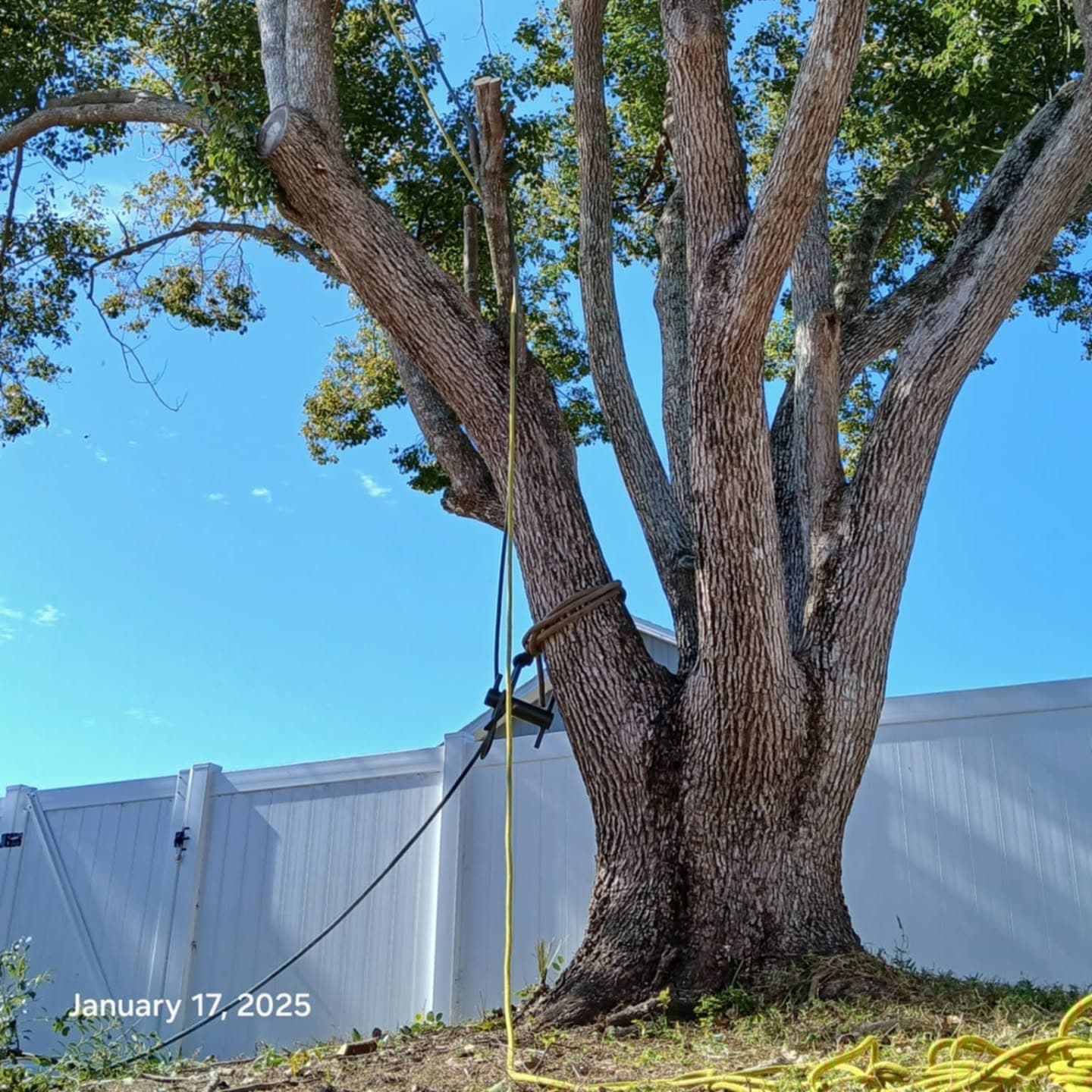
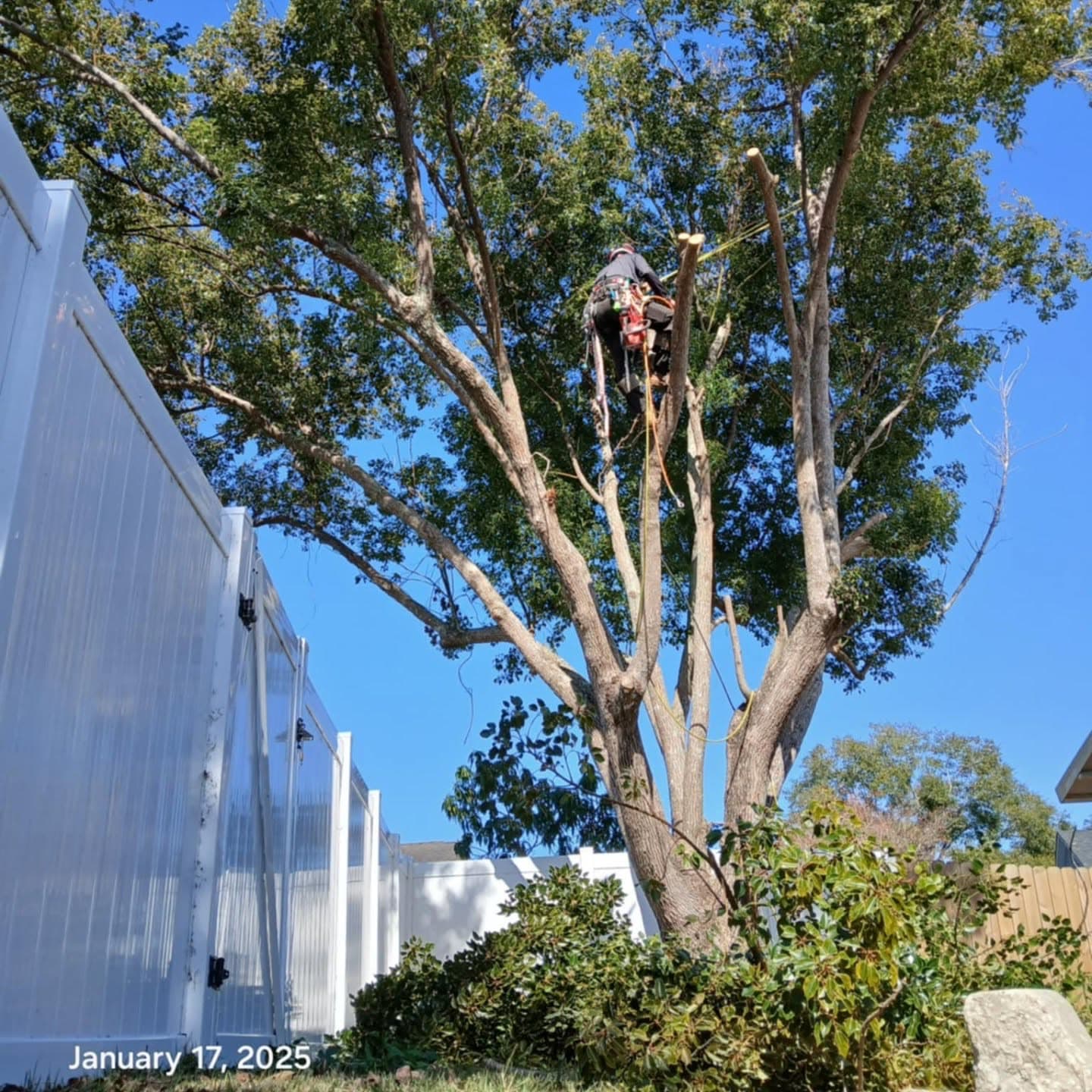
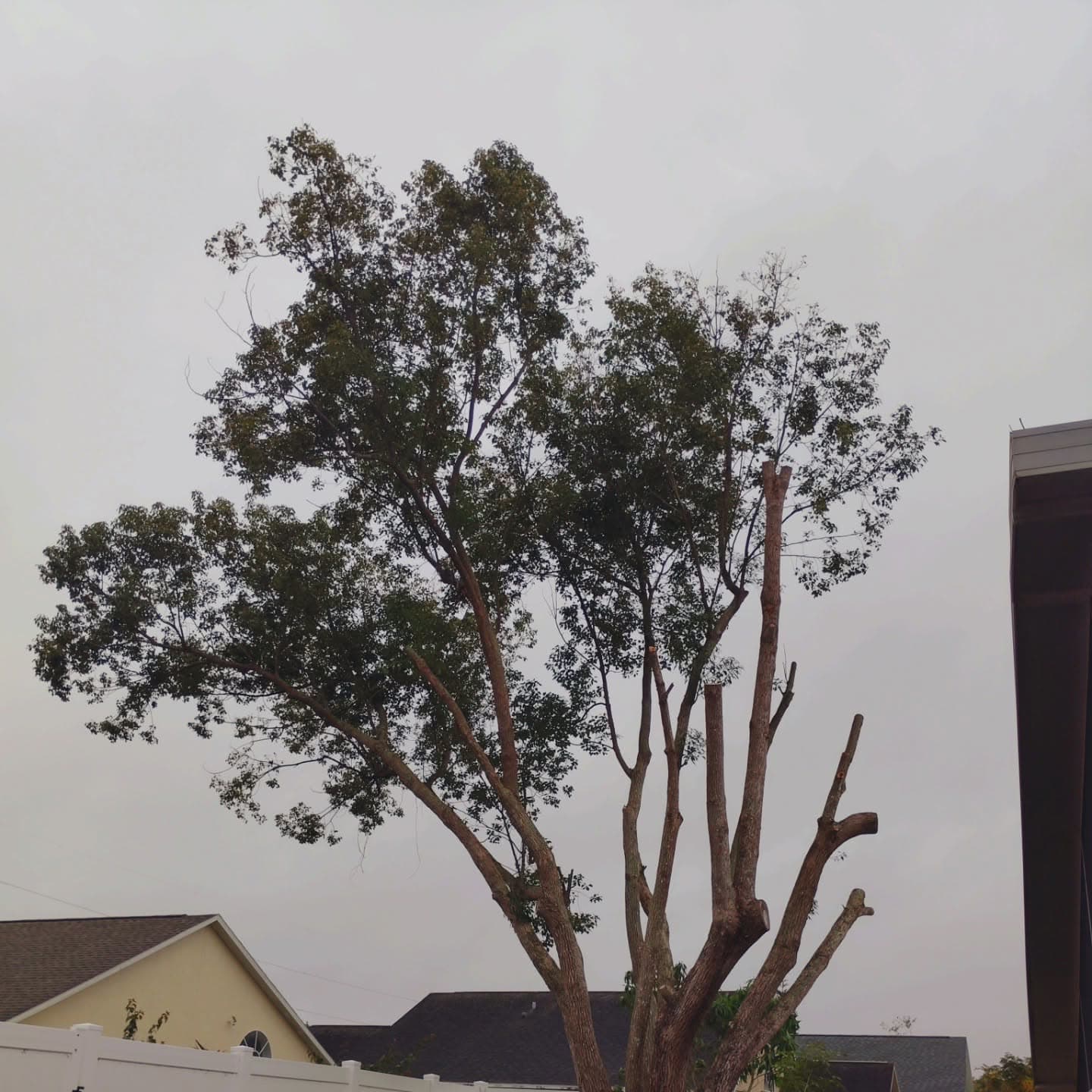
Recent tree trimming & pruning work
Common questions
When is the best time to prune?
Deadwood can come out any time of year. Structural pruning is often best in late winter dormancy, while some species have specific windows to avoid disease. We time work to the species on your property.
How often should trees be trimmed?
Most mature shade trees do well on a 3-5 year cycle. Fast growers near structures, or trees you keep at a certain size, may need attention every 1-2 years.
Is topping ever the right call?
No. Topping forces weak regrowth that fails in storms and shortens the tree's life. If a tree is genuinely too big for its spot, a reduction done at proper lateral branches, or removal and replanting, is the honest answer.